Special Sessions
MedGU-26 invites the submission of abstracts covering all cross-cutting themes of Earth and planetary sciences, with particular emphasis on the Conference Tracks.
In addition to the main Conference Tracks, proposals for Special Sessions and Satellite Events are warmly solicited from the international scientific community until 31 July 2026.
These sessions provide an excellent opportunity to highlight emerging topics, interdisciplinary research themes, and innovative scientific challenges within the broad scope of geosciences and environmental sciences.
Participants are encouraged to explore the Special Sessions organized during MedGU-24 and MedGU-25 in order to gain insight into the diversity and quality of previously accepted thematic sessions.
Researchers interested in proposing a Special Session and/or Satellite Event are kindly invited to submit their proposals by contacting contact@medgu.org.
To encourage active scientific engagement and community building, the lead convener of each approved Special Session or Satellite Event with 10 or more registered participants will benefit from a complimentary conference registration. Sessions reaching 20 or more registered participants will entitle the second convener to a complimentary conference registration.
Track 15 (Special Session): Landslides: Processes, Hazard and Risk
Landslides can have devastating direct and indirect consequences, including fatalities, property damage, loss of livelihoods, and the transfer of sediment across a wide range of environments, from steep mountainous terrain to gentle hillslopes. Frequently occurring within multi-hazard contexts, landslides may be preconditioned or triggered by earthquakes, intense or prolonged rainfall, wildfires, land use changes, and other human-related activities. In turn, they can give rise to secondary hazards such as flash floods or landslide dams, forming complex cascading events. Addressing landslide phenomena remains a major challenge for the geoscience community, requiring a comprehensive understanding of underlying processes and thorough assessments of hazard, vulnerability, and risk. The implications of ongoing climate change further complicate the framework. This session aims to bring together researchers working across the full spectrum of landslide science. Its scope spans from local to global scales, encompassing empirical studies of landslide process chains, advances in modeling and monitoring techniques, innovative methods in landslide susceptibility, hazard and risk assessment, state-of-the-art approaches to landslide prediction and early warning, assessments of socio-economic vulnerability, and investigations into the interactions between landslides, human activities, and other natural extremes.
Conveners
Track 16 (Special Session): Weather Extreme Events in the Mediterranean: Spatio-temporal dynamic, Attribution, Physical mechanisms, and Future scenarios
The Mediterranean region is a global hotspot of weather and climate extremes, including heatwaves, droughts, extreme precipitation, windstorms, and compound hazard events. These extremes exhibit complex spatiotemporal variability driven by atmospheric circulation patterns, land–atmosphere interactions, ocean–atmosphere coupling, and regional physiographic factors. Understanding their dynamics, underlying physical mechanisms, and evolving trends is essential for improving climate predictability and resilience.
This session invites contributions focused on the spatiotemporal dynamics, attribution, and physical drivers of extreme weather events in the Mediterranean, as well as their projected evolution under future climate scenarios. Particular emphasis is placed on studies that investigate causal mechanisms, circulation regimes, feedback processes, and interactions across spatial and temporal scales. Contributions employing observational datasets, reanalysis products, process-based diagnostics, statistical methods, machine learning approaches, and climate model simulations—including high-resolution and large ensemble experiments—are strongly encouraged.
This session welcomes studies addressing both individual and compound extreme events, their physical mechanisms, attribution to anthropogenic and natural forcings, and their future evolution under different emission pathways. The session aims to improve understanding of the processes governing extremes and their implications for regional climate risks. As such, it will foster interdisciplinary collaboration among researchers working on extreme event dynamics, climate variability and change, attribution science, and future projections, contributing to advancing scientific knowledge and supporting adaptation and risk management strategies in Mediterranean environments.
Suggested Topics:
- Spatiotemporal variability and trends of extreme weather events in the Mediterranean
- Physical mechanisms driving heatwaves, droughts, and heavy precipitation.
- Role of atmospheric circulation patterns, blocking, and teleconnections
- Land–atmosphere, ocean–atmosphere, and soil moisture feedback processes
- Compound and cascading extreme events and their underlying mechanisms
- Event attribution to anthropogenic climate change and natural variability
- Detection and attribution using observational records and climate model ensembles
- High-resolution regional climate modeling and process-based diagnostics
- Machine learning and advanced statistical methods for extreme event analysis
- Future projections of extreme weather events under different climate scenarios
- Changes in frequency, intensity, duration, and spatial extent of extremes
- Uncertainty assessment in attribution and projections
- Implications for regional climate risk and adaptation planning
Session Rationale and Relevance:
The Mediterranean basin is highly vulnerable to extreme weather events that are increasing in frequency, intensity, and complexity under climate change. Recent events—including prolonged droughts, record-breaking heatwaves, destructive floods, and severe storms—highlight the need to better understand their spatiotemporal evolution, physical drivers, and attribution to anthropogenic forcing. Advancing knowledge of the mechanisms governing extreme events and improving projections of their future evolution are critical scientific priorities. Such understanding is essential for improving climate predictions, strengthening resilience, and informing evidence-based adaptation strategies in this climate-sensitive region. This session directly contributes to advancing fundamental understanding of extreme weather dynamics and climate change impacts in the Mediterranean, supporting the broader goals of Earth system science, climate attribution, and climate risk assessment.
Conveners
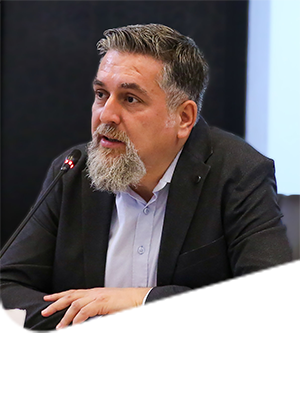
Ahmed El-Kenawy
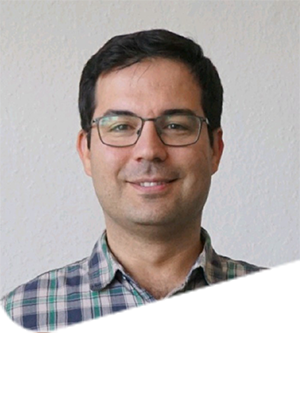
Juan I. López Moreno
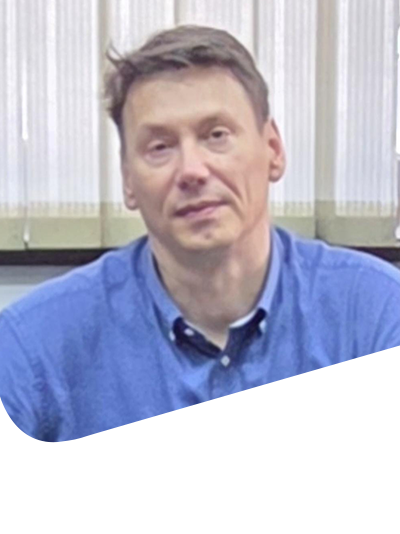
Sergio M. Vicente-Serrano
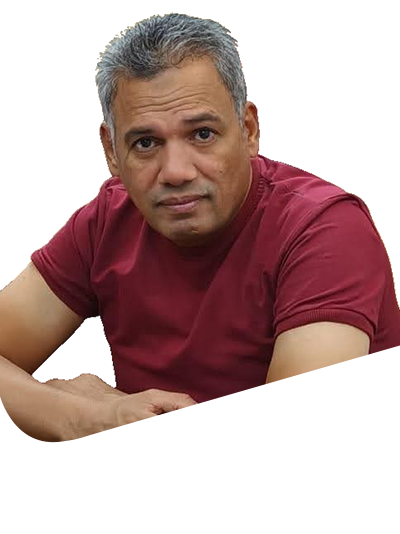
Abdelazim Negm
Track 17 (Special Session): AI in Geosciences: From Earth Observation and Environmental Monitoring to Prediction and Decision Support
Artificial Intelligence (AI) is transforming geosciences by enabling innovative approaches for analyzing the rapidly growing volume of Earth observation, environmental, and geospatial data. Advances in machine learning, deep learning, foundation models, and physics-informed AI are providing new opportunities to improve environmental monitoring, Earth system understanding, predictive modeling, and decision-making across a wide range of geoscientific applications.
This session aims to bring together researchers and practitioners working at the intersection of AI and geosciences. We welcome contributions presenting innovative methodologies and real-world applications that integrate AI with satellite observations, remote sensing, GIS, numerical models, environmental monitoring networks, and other geospatial data sources. Topics of interest include, but are not limited to, remote sensing and Earth observation, climate and environmental monitoring, water resources and hydrogeology, natural hazard prediction and risk assessment, digital twins, Earth system modeling, explainable and physics-informed AI, and intelligent decision-support systems for sustainable environmental management.
The session seeks to foster interdisciplinary collaboration among geoscientists, environmental scientists, hydrologists, climatologists, remote sensing specialists, and AI researchers while showcasing AI-driven solutions that advance our understanding of Earth systems, improve predictive capabilities, and support climate resilience, disaster risk reduction, and sustainable management of natural resources.
Convener
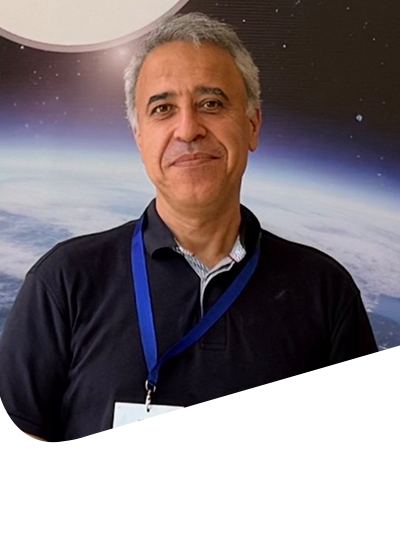
Hossein Bonakdari